
Custom Logistics That Simplify Your Supply Chain: Tailored Strategies for Efficiency and Growth
Custom logistics solutions align warehousing, transport, inventory, and fulfilment to a business’s specific needs. By designing processes, systems, and people around seasonal demand, product characteristics, and channel mix, bespoke logistics simplifies complex flows and cuts wasted time and cost. This page outlines how tailored logistics work, why bespoke 3PL and project logistics matter, and which technologies and processes deliver measurable gains in lead time, cost control, and resilience. You will find practical examples, comparison tables, and clear next steps, and see how a specialist provider like Pat Express turns customized 3PL, project logistics, container unpacking, and freight forwarding into real operational results.
What Are Custom Logistics Solutions and Why They Matter
Custom logistics adapt standard services to a company’s unique product mix, sales patterns, and constraints. They do this by aligning warehousing, inventory rules, fulfilment, and routing with a client’s operating model to reduce exceptions and speed flow. The outcome is higher efficiency, lower total cost of ownership, and stronger supply chain resilience, especially where one-size-fits-all approaches cause frequent manual fixes. Understanding this framework helps you decide when bespoke logistics are the right strategic move.
What “Bespoke Logistics” Actually Means for Your Business
Bespoke logistics configures processes and systems around a client’s needs rather than forcing a standard setup. That means custom process maps, integrations with your systems, and handling rules that treat SKUs, channels, and customers differently when required. Businesses choose bespoke solutions when variability, seasonal spikes, special packaging, or multi-channel fulfilment creates exceptions under standard models. For example, an e-commerce brand mixing subscriptions with flash sales benefits from separate inventory pools and picking strategies so peak demand doesn’t disrupt steady subscriptions, reducing stockouts and overtime.
Key Benefits of Tailored Logistics for Supply Chain Performance
Tailored logistics deliver measurable operational value. They cut operating costs by reducing unnecessary touches and optimizing storage, speed up deliveries through smarter routing and slotting, and improve reliability by removing recurrent exceptions. Customisation also helps maintain consistent service levels across channels and regions, boosting customer satisfaction and supporting growth. In short, bespoke logistics convert complexity into predictable performance and commercial advantage.
Below are the primary advantages of bespoke logistics and how they translate to business outcomes.
Cost efficiency: Targeted processes reduce handling and storage waste through precise slotting and replenishment rules.
Faster lead times: Custom routing and fulfilment logic shorten the time from order to delivery.
Scalable capacity: Flexible resource models let you scale for seasonal peaks without long-term fixed costs.
Lower risk: Contingency plans and exception workflows limit disruption when things go wrong.
These benefits explain why companies moving from standard logistics to custom models often see immediate operational gains and better long-term scalability. Next we look at how customized 3PL partners make these improvements happen.
How Custom 3PL Solutions Improve Supply Chain Performance
Custom 3PLs take complex or variable logistics functions and run them against client-specific rules. They align operations, technology, and people with your needs: configuring warehousing, fulfilment, and inventory management to your processes and integrating with sales and ERP systems. The result is faster cycle times. fewer errors and a lower cost per order, important for businesses with fluctuating demand or multi-channel distribution.
Scalable Warehousing and Fulfilment for E-commerce
Scalable warehousing adjusts space, labour and picking strategies to match e-commerce patterns: temporary labour pools, dynamic slotting, and sensitive replenishment triggers. A customised fulfilment model applies packing rules, channel-specific SLAs, and returns handling to protect margins and speed. Integrations with order systems enable real-time SKU allocation to optimal zones, reducing travel time and improving pick accuracy, so you avoid stockouts during peaks and keep priority channels moving quickly.
The table below compares common 3PL capabilities and the value they deliver.
| Capability | Characteristic | Value |
| Scalable storage | Flexible racking and temporary space | Matches seasonal capacity without fixed costs |
| Dynamic labour | On-demand pick/pack teams | Keeps accuracy and throughput during surges |
| Channel-specific fulfilment | Custom rules per sales channel | Protects margins and service levels |
| Returns processing | Dedicated reverse logistics flow | Speeds processing and reduces return costs |
Inventory Management and Distribution Built to Your Rules
Custom inventory management sets reorder points, safety stock, and replenishment rules based on SKU velocity, lead-time variability, and service targets rather than generic formulas. Distribution planning, route optimisation, cross-docking where useful, and allocation logic reduce transit time and handling. Integration with ERPs and sales channels gives visibility so inventory is forecast and rebalanced proactively, preventing overstock and lost sales. Combined with scalable warehousing, these strategies turn aggregated demand signals into precise replenishment actions that preserve service and free up working capital.
What Project Logistics Services Does Pat Express Offer for Complex Supply Chains?
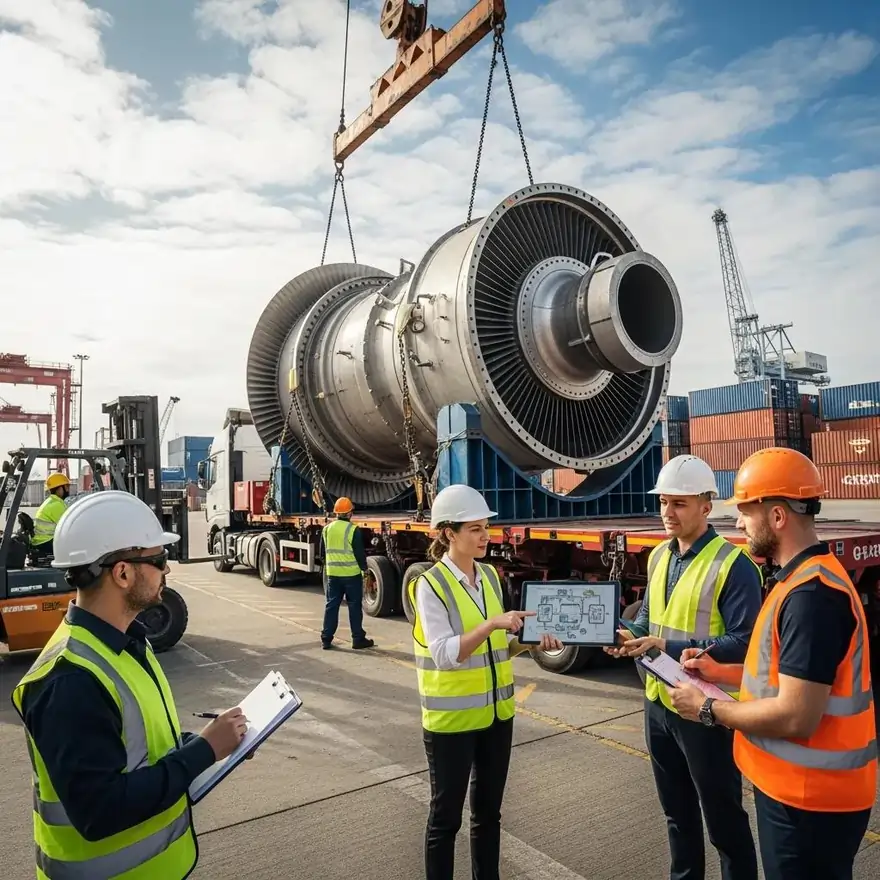
Project logistics handles oversized, time-critical, or technically complex moves through planning, specialist handling, and coordinated execution. Services combine route planning, heavy‑haul expertise, and stakeholder management to keep projects on time and on budget. With engineering reviews, permit management, and contingency planning up front, project logistics turn complex transport challenges into managed projects with clear accountability and measurable results.
Managing Large-Scale, Time-Sensitive Logistics Projects
Large projects start with a clear plan: scope, route and risk assessment, schedule, and resource allocation. Coordinating carriers, authorities, and client stakeholders minimises regulatory delays and ensures equipment and crews are ready when needed. Risk management includes alternative routes, staging areas and contingency crews so delays do not cascade. For example, coordinating multiple oversized deliveries to a construction site with phased unloading and on-site handling rules prevents congestion and keeps the project timeline on track.
Research emphasises the importance of using the right specialised equipment, such as the correct trailer type, for these complex movements.
Project Logistics: Tailored Transportation for Oversized Cargo
Project logistics demands careful attention when moving heavy or sensitive loads. Choosing the correct trailer and equipment is a critical success factor: cargo characteristics and transport requirements determine the right trailer type. The wrong choice can cause project delays, extra costs, safety hazards, and environmental harm.
Evaluation of the selection of low-bed trailers in the transportation of oversized and overweight cargo: a hybrid picture fuzzy critic-marcos model, ÖF Görçün, 2025
Project logistics commonly include these integrated capabilities.
Planning and scheduling: Coordinated timelines that align transport windows and site readiness.
Permitting and compliance: Liaison with authorities to secure approvals.
Specialised handling: Equipment and trained crews for oversized, delicate, or high-value loads.
These capabilities show why project logistics are more than transport: they are managed solutions designed to protect timelines and budgets.
Specialised Container Unpacking and Freight Forwarding
| Service Component | Attribute | Outcome |
| Container unpacking | Prioritised staging and SKU sequencing | Faster throughput and less damage |
| Freight forwarding | Multimodal coordination and consolidation | Lower transit cost and more reliable ETAs |
| Customs coordination | Documentation and clearance management | Reduced port dwell and compliance risk |
This comparison shows how unpacking and forwarding combine operational steps to deliver faster, safer, and more cost-effective import flows.
How Can Custom Logistics Support Industry-Specific Needs?
Custom logistics solve industry-specific pain points by mapping logistics rules directly to sector workflows, consumer returns, just-in-time replenishment for manufacturing, or shelf-ready distribution for retail. The idea is simple: translate commercial KPIs into operational rules (slotting for fast movers, vendor-managed inventory for production lines, and dedicated reverse lanes for e-commerce returns). Built this way, processes reduce waste and improve reliability because they’re designed around your business outcomes, not generic logistics metrics.
Optimising E-commerce Logistics for Seamless Fulfilment
E-commerce needs fast, accurate fulfilment, efficient returns handling, and multi-channel logic that meets customer expectations. Tactics include channel-based inventory pools, automated reprioritisation for fast movers, and a streamlined reverse logistics process to recover value quickly. Integrations, order management, and parcel tracking give visibility across the fulfilment lifecycle so exceptions are flagged and fixed earlier, improving speed and conversion by making the right stock available in the right place with predictable delivery times.
High-impact e-commerce actions often include:
Multi-channel allocation: Assign inventory to channels based on margin and demand.
Returns automation: Streamline reverse flows to reduce days-to-resell.
Fulfilment SLAs: Differentiate service promises for premium customers.
These actions lower fulfilment cost per order and lift shopper satisfaction, supporting repeat business and growth.
Supply Chain Strategies for Manufacturing and Retail
Manufacturing benefits from just-in-time replenishment, vendor-managed inventory, and sequenced deliveries that match production cadence. Retailers gain from shelf-ready packaging, cross-docking, and scheduled replenishment that align inventory to store demand and promotions. Custom rules for packaging, labelling and handling protect product integrity and reduce in-store labour. Coordinating supplier schedules with distribution capacity smooths lead-time variability and reduces stockouts, keeping production and retail availability consistent.
Which Technologies Power Pat Express’s Custom Logistics?
Technology turns rules and data into automated actions: a Warehouse Management System enforces client-specific pick rules while real-time tracking provides visibility and exception alerts. Together, these tools automate decisions that once needed manual oversight, cutting errors and speeding operations. Dashboards and analytics surface cost and performance patterns so teams can make targeted improvements. These innovations are the backbone of modern bespoke logistics.
Warehouse Management Systems and Real-Time Tracking
A Warehouse Management System (WMS) puts client workflows, slotting logic, pick paths, and replenishment rules into practice so each SKU is handled according to its priority. Real-time tracking ties goods in transit to warehouse status, enabling faster allocation and less idle time. Integrations with ERPs and order systems create a single view of inventory and orders, allowing accurate customer promises. These links reduce manual handoffs and create predictable throughput that scales with demand.
| Technology | Functionality | Benefit |
| WMS | Enforces pick/pack rules and slotting | Higher accuracy and faster fulfilment |
| Real-time tracking | Visibility across transport legs | Early exception detection and ETA updates |
| Analytics dashboards | Performance and cost insights | Data-driven optimisation and clearer ROI |
This table shows how a compact technology stack translates logistics rules into consistent operations and measurable return.
Digital Tools for Visibility and Cost Reduction
Valuable digital tools include freight-cost analytics, route-optimisation engines, and consolidated dashboards for decision-making. Analytics clarify relationships like “freight cost → carrier choice,” helping planners balance speed and price. Route optimisation cuts transit miles while meeting ETAs, and dashboards make cost-to-serve visible across SKUs and channels. Together, these tools support ongoing cost reduction and faster, better decisions across the supply chain.
Common Questions About Custom Logistics
Buyers commonly ask about timelines, costs, and the practical value of customisation. The main concerns are implementation effort and expected return. A clear onboarding framework, assessment, design, phased implementation, and testing help clients anticipate resources and milestones. Custom logistics is an investment: it’s about fewer exceptions and lower operating costs per order rather than a single-price comparison. When choosing a provider, prioritise proven ability to translate business rules into operational systems and to manage projects across regions.
How Long to Implement a Custom 3PL Solution?
Implementation usually follows four phases: assessment, design, implementation, and testing. Assessment defines business rules and KPIs; design turns those rules into processes and WMS configurations; implementation connects systems and trains staff; testing validates performance against KPIs. Timelines vary with integration complexity, scale, and regulatory requirements, but clear milestones and staged rollouts keep risk manageable. Clients who prepare data and decision authorities often onboard faster.
Common influencing factors include:
System integration complexity: More integrations take more time.
Operational scale: Larger SKU counts or additional sites lengthen testing cycles.
Regulatory needs: Customs or special permits add coordination steps.
Recognising these factors helps set realistic expectations and prioritise early wins.
Why Customisation Matters for Supply Chain Efficiency
Customisation aligns logistics processes with business rules, reducing exception handling and manual rework that increase cost and delay fulfilment. In practical terms: custom rules reduce manual interventions, which boosts throughput and accuracy. Tailored configurations let high-frequency items follow optimised paths while low-frequency SKUs Use cost‑efficient handling, balancing service and cost. With bespoke KPIs and measurement, teams can continuously improve operations.
Key strategic reasons customisation matters:
Process alignment: Operations reflect commercial priorities.
Lower variance: Fewer exceptions create steadier throughput.
Targeted investment: Resources focus where they deliver the greatest return.
These strategic effects explain why custom logistics turns complexity into predictable performance and sustainable efficiency.
- Business integration note: Pat Express delivers tailored 3PL and project logistics with warehousing in Sydney and Queensland, plus services such as container unpacking, freight forwarding, and commercial furniture installations. As a specialised provider, Pat Express configures workflows and technology to your rules and manages project logistics and customs coordination where required, providing a practical path from bespoke design to operational delivery.
If you need a bespoke 3PL partner: Start by clarifying your core KPIs and integration points.
If you have time-sensitive or oversized moves: Make sure project plans include permits and contingency routing.
If you operate in e-commerce or retail: Prioritise returns handling and channel-specific fulfilment rules.
Conclusion
Custom logistics align operations with your business needs to improve efficiency, reduce costs, and boost resilience. With tailored strategies and the right partner, you can deliver better customer experiences and support growth. PAT Express specialises in bespoke 3PL and project logistics, talk to us to explore how a customised approach can transform your operations.