

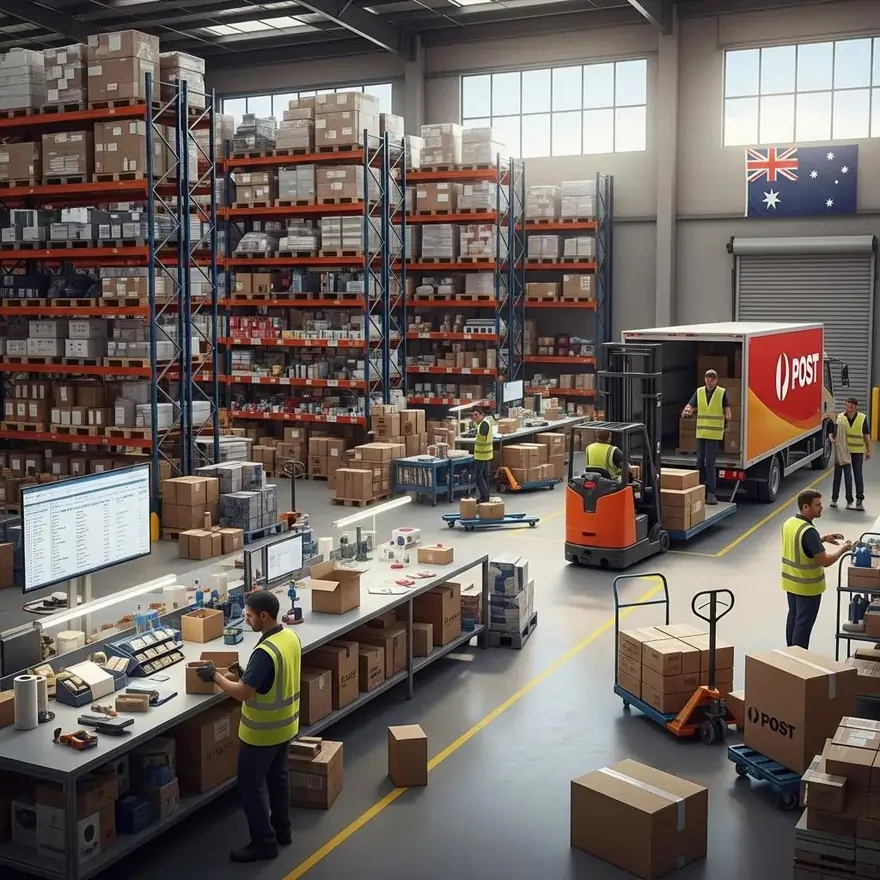
Ecommerce logistics in Australia – a practical guide to 3PL, fulfilment, and shipping
Ecommerce logistics describes everything that happens after a customer clicks buy, from receiving stock and storing it to picking, packing, shipping, and handling returns. This guide walks through how that system works in Australia, why logistics directly affects conversion and customer retention, and how to choose and work with third‑party logistics (3PL) and fulfilment partners. You will find clear service definitions, key operational metrics, shipping options (including last mile), returns best practices, and how WMS and platform integrations improve accuracy and visibility. Australia’s vast distances and spread‑out population create real trade‑offs; the right logistics choices cut costs, speed up delivery, and make customers come back.
PAT Express demonstrates these capabilities firsthand. We provide freight forwarding, 3PL warehousing, pick‑and‑pack and distribution, plus project logistics and container unpacking. Our Sydney and Queensland hubs show how regional nodes speed import handling and local delivery while scaling fulfilment to match business needs.
What are e-commerce logistics, and why they matter in Australia
Ecommerce logistics is the set of services and systems that receive, store, pick, pack, and deliver online orders while tracking inventory and managing returns. It ties physical flows to information systems and carrier networks so you can meet customer expectations for speed and transparency. Better logistics cut transit time and fulfilment cost while improving on‑time delivery and customer satisfaction, and that lifts conversion and lifetime value. In Australia, long distances and rural deliveries force choices between centralized hubs and distributed fulfilment; smarter inventory placement, selected shipping partners, and real‑time visibility help you balance cost with speed.
Defining ecommerce logistics, the core components
E-commerce logistics breaks down into clear steps: receiving inbound stock, storing it, picking and packing orders, shipping to customers, and handling returns. Each step is supported by systems such as a warehouse management system (WMS) and carrier integrations. A WMS improves slotting, pick paths, and cycle counts to boost inventory accuracy; pick‑and‑pack turns order data into fast, accurate fulfilment. Freight forwarding brings international shipments and containers into domestic warehouses. Together, these parts create the operational backbone that lets merchants promise reliable delivery windows and tracking.
Research highlights that e‑commerce fulfilment covers the whole supply chain, from supplier ordering through to the customer, not just the final delivery step.
Framing e‑commerce fulfilment and 3PL services
Fulfilment involves ordering from suppliers, receiving and storing stock, and then packaging and sending products to customers. Because these processes are complex and time‑sensitive, many retailers use external operators. This paper analyzes fulfilment services in e‑commerce and their growing role in practice.
Fulfilment service in e-commerce logistics, A Kawa, 2017
Why efficient logistics matter for Australian online retailers
Efficient logistics lower fulfilment cost per order and speed up delivery, two essentials in a market where customers expect fast, trackable shipping. Faster, more reliable delivery reduces cart abandonment and boosts repeat purchases, improving lifetime value and margins. For national sellers, spreading inventory between Sydney, Queensland, and other hubs shortens transit distances to major population centers and regional customers. Investing in logistics pays off in measurable KPIs like order accuracy, on‑time‑in‑full (OTIF), and returns turnaround, and it makes cross‑border expansion simpler.
How third‑party logistics providers support e‑commerce businesses
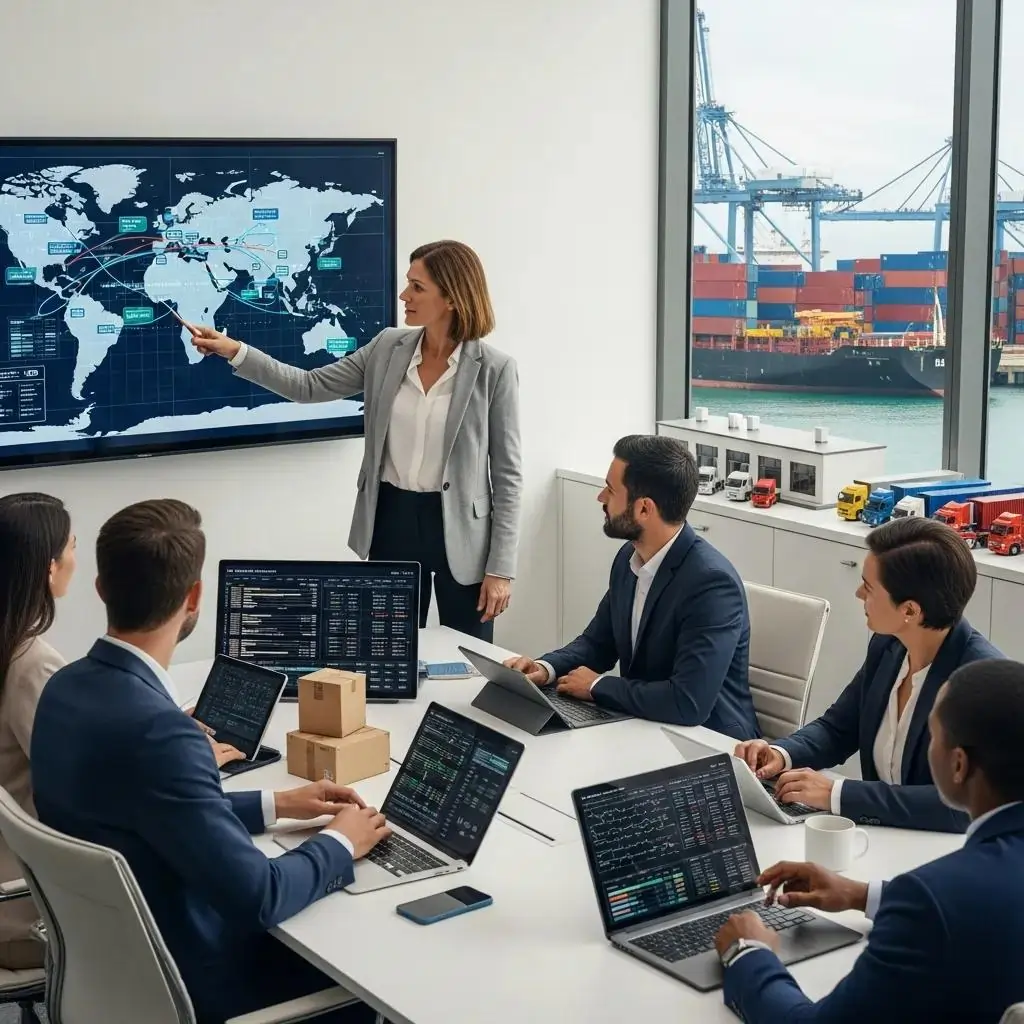
Third‑party logistics providers (3PLs) act as outsourced partners who run warehousing, pick‑and‑pack, inventory control, and distribution for retailers. 3PLs offer scalable capacity for seasonal peaks, established carrier networks, and operational processes that reduce capital expenditure and improve fulfilment KPIs. Outsourcing routine logistics frees your team to focus on product and marketing, while the 3PL handles variable labour, compliance, and tactical freight forwarding for imports.
Core 3PL services: warehousing, pick‑and‑pack and inventory control
Here are the typical 3PL functions and the metrics you should watch. Warehousing covers ambient and secure storage, inbound receiving, and cross-dock operations that feed fast SKUs into picks. Pick‑and‑pack includes order aggregation, accuracy checks, and labeling; track picks per hour and pick accuracy. Inventory management uses cycle counts, safety stock, and replenishment triggers to avoid stockouts. The table below summarizes these services and what they’re best for.
| Service Area | Typical Operational Metric | Best-use Case |
| Warehousing (ambient/storage) | Storage density, inbound throughput | Regional stock hubs for faster delivery |
| Pick-and-pack operations | Pick accuracy (%), picks/hour | High‑volume storefronts with many SKUs |
| Inventory management | Days of inventory, safety stock | Tight stock control and reliable replenishment |
Benefits of partnering with Australian 3PL providers
Working with a local 3PL gives practical advantages: faster delivery from regional warehouses, local carrier knowledge, and easier regulatory compliance, plus scalable labour and storage for peak seasons. Providers operating in New South Wales and Queensland cut inland transit times and simplify import unpacking near ports. Many clients see lower cost per order and better OTIF after onboarding a specialist 3PL. When evaluating partners, check SLAs, integration with your e-commerce platform, and experience with freight forwarding and container unpacking.
What e-commerce fulfilment services are available in Australia?
Fulfilment ranges from self‑fulfilment to fully outsourced 3PL, with hybrid and white‑label options in between. The right choice depends on order volume, SKU complexity, customer geography, and how much capital you’re willing to invest. Sydney and Queensland hubs bring clear advantages: port proximity, access to big population centers, and faster regional reach. Prioritize scalability, transparent pricing, inventory visibility, and platform integrations when choosing a provider.
Fulfilment solutions overview: Sydney and Queensland warehousing
Sydney and Queensland warehouses act as inbound and outbound nodes close to international shipping routes and Australia’s major customer bases. Sydney facilities typically serve southern and eastern metro areas with faster urban deliveries, while Queensland hubs shorten transit to northern and regional markets. These sites speed container unpacking and inbound handling so stock becomes available sooner. PAT Express runs warehouses in both states to support national fulfilment and import processing.
Scalable fulfilment models for small to large retailers
Fulfilment can scale from shared, pay‑as‑you‑go space for small merchants to dedicated pallets or racked areas for high‑volume sellers needing custom workflows. Shared fulfilment lowers fixed costs for startups; dedicated solutions give control and can reduce unit costs when volume grows. Consider pick density, average order lines, and seasonality when choosing a model. Good providers offer clear onboarding, SLA commitments, and transparent fees tied to storage tiers and pick/pack activity. Move from shared to dedicated when volume and lead‑time needs justify it.
| Fulfilment Model | Characteristic | Ideal Merchant |
| Shared fulfilment | Low fixed cost, flexible capacity | Small merchants testing the market |
| Hybrid fulfilment | Blend of in-house and outsourced | Growing retailers wanting control and scale |
| Dedicated fulfilment | Custom processes, lower unit cost at scale | High‑volume sellers with stable demand |
How shipping and distribution work for online stores in Australia
Shipping and distribution cover carrier selection, transit modes, and last‑mile execution to move parcels from fulfilment centers to customers. Domestic shipping relies on parcel and freight networks with varied transit times; international shipments need freight forwarding, customs clearance, and local courier handover. The last mile is the most visible and often the most expensive part of the chain. Smarter parcel sizing, regional carrier selection, and routing reduce costs and improve delivery windows. Integrations that automate labels and tracking also cut manual errors and keep customers informed.
Domestic, international and last‑mile shipping explained
Domestic shipping uses parcel networks for consumer parcels and road or air freight for bulk or urgent freight; transit time depends on distance and service level. International shipping uses freight forwarders to manage ocean or air carriage, customs clearance, and inland transport to fulfilment hubs; the main cost drivers are weight/volume, duties, and handling. Last-mile delivery covers the final leg to customers, where address density, rural access, and delivery attempts affect cost and reliability. To cut expenses and delays, use regional fulfilment nodes, optimize packing to reduce dimensional weight, and pick carrier services that match customer expectations.
Australia’s geography, wide distances, and low‑density regions create specific sustainability and cost challenges for last‑mile delivery.
Last‑mile logistics: challenges in Australian e‑commerce
This study examines last‑mile logistics for online grocery orders and the sustainability questions that arise in sparsely populated countries like Australia.
Sustainability challenges of last-mile logistics and transition to online grocery retailing in sparsely populated areas, Y Wu, 2024
| Shipping Mode | Typical Transit Time | Cost Drivers |
| Domestic parcel | 1–7 days (distance dependent) | Distance, service speed, parcel dimensions |
| International freight | Weeks (ocean) / Days (air) | Weight/volume, customs, duties, handling |
| Last‑mile delivery | Same‑day to 3 days | Rural access, delivery attempts, service level |
Integrating shipping with platforms like Shopify and Amazon
Platform integrations automate order import, label creation, and tracking updates so you avoid manual entry and mistakes while keeping customers informed. Key touchpoints include order import, inventory sync, carrier booking, and return label generation. Rules‑based carrier selection (by weight or zone) lowers cost while keeping SLAs. Always test integrations before peak seasons and set reconciliation SLAs for inventory and order status to prevent costly fulfilment errors.
What are effective returns management strategies for Australian e-commerce?
Returns management (reverse logistics) defines the customer policy and the operational path for returned items, balancing customer experience with the economics of disposal, refurbishment, or restocking. A good returns flow has clear instructions, automated approvals, and fast inspection and disposition to minimize capital tied up in returns. Returns data and also flags product or sizing issues that reduce future returns. In Australia, long‑distance returns can be costly without local return hubs or consolidated prepaid return options.
Streamlining returns to build customer loyalty
A smooth returns process has a simple authorisation step, clear return labels, quick inspections, and fast refunds or exchanges, all tracked in one system. Track KPIs like returns turnaround, inspection accuracy, and percent restocked versus written off. Fast, consistent decisions (refund, repair, or resell) keep customers happy and cut handling costs. Local consolidation points or regional drop‑off partners help lower reverse logistics expenses for nationwide sellers.
Rising online sales and tighter consumer expectations make returns management a strategic priority for B2C e-commerce.
Returns management and reverse logistics in B2C e‑commerce
This thesis describes and analyzes returns management solutions for B2C ecommerce, noting that rising return volumes and sustainability expectations have made reverse logistics a growing focus for retailers.
Management of returns in e-commerce B2C: development and implementation of solutions in an online retailer, 2017
Technology and processes that speed returns handling
Tools like RMA systems, barcode‑driven inspection workflows, and WMS/order management integrations speed returns processing and capture disposition data. Automating label generation and authorisation removes manual steps and errors, while structured inspections enable fast grading and disposition (resell, refurbish, recycle). Syncing returns with your e-commerce platform ensures refunds and inventory updates happen together, preventing oversells and improving accuracy. Returns data also feed product quality fixes and policy changes that lower return rates over time.
How technology and integrations improve e-commerce logistics
Technology and integrations unlock efficiency and visibility across fulfilment: a modern WMS optimises slotting and pick paths, APIs connect orders to carriers for on‑demand labels, and real‑time tracking gives customers clarity and reduces service inquiries. Automation cuts manual touchpoints and error rates, while analytics from integrated systems guide smarter inventory placement and carrier choices. Recent research shows merchants using integrated WMS and platform automation often achieve lower fulfilment costs per order and better OTIF.
Warehouse management systems and real‑time tracking
A WMS delivers core capabilities, inventory accuracy, slotting optimisation, and pick-path generation that boost throughput and reduce errors. Real‑time tracking adds customer visibility to those operations. Typical WMS improvements include better cycle‑count accuracy, shorter lead times, and higher picks/hour. WMS efficiencies let merchants consolidate SKUs across Sydney and Queensland hubs to cut transit times and distribution costs, delivering predictable experiences and better margins.
Platform integrations and automation for smoother fulfilment
APIs and middleware connect marketplaces and storefronts to WMS, carriers, and inventory systems so orders import automatically, pick lists generate, and carriers book without manual work. Automation can route orders to the nearest fulfilment hub, choose carriers by cost or SLA, and auto-create return labels. Strong data reconciliation and exception handling keep inventory accurate and prevent production failures. When evaluating partners, ask for documented integration methods, support for major platforms, and proven automation workflows that reduce manual exceptions.
PAT Express combines WMS functionality and platform connections to support e-commerce fulfillment workflows, giving near real‑time inventory visibility and automated carrier handling to speed order processing. Our tech lets merchants sync orders and stock across Sydney and Queensland warehouses, reducing stockouts and improving delivery predictability. For businesses that need freight forwarding, container unpacking, and 3PL fulfilment in one partner, PAT Express positions itself to simplify complex logistics while scaling to your needs.
Why choose Pat Express
We offer freight forwarding, regional warehousing in Sydney and Queensland, plus pick‑and‑pack fulfilment, a single, integrated logistics solution for e-commerce merchants.
Practical benefit
One partner handling inbound import processing and domestic fulfilment reduces handoffs, shortens lead times, and makes accountability straightforward.
Implementation note
Evaluate providers for WMS integration, transparent pricing, and experience with container unpacking and project logistics to ensure a smooth scale‑up.
Next steps for merchants
Prioritize clear SLAs, test integrations ahead of peak seasons, and choose regional fulfilment nodes that align with your customer geography.
Operational focus
Track OTIF, pick accuracy, and returns turnaround as core KPIs to drive continuous improvement and keep customers satisfied.
Conclusion
Getting e-commerce logistics right in Australia improves delivery speed, cuts costs, and lifts customer satisfaction. Working with a capable 3PL lets you focus on growth while their systems and processes keep fulfilment reliable. Tailored logistics strategies and the right hubs, integrations, and partners deliver a clear competitive edge for online retailers. Contact us to see how our services can streamline your e-commerce operations.