

Third‑Party Logistics in Australia – a practical guide to 3PL solutions
Third‑party logistics (3PL) providers handle your warehousing, distribution, and transport so you can focus on the parts of your business that matter most. This guide walks through what Australian 3PLs do, why companies increasingly outsource logistics, and how services like freight forwarding, e-commerce fulfilment, and project logistics create measurable value. Along the way we explain the shift from single‑party logistics to outsourced partnerships and outline the core components, benefits, and performance measures you should expect. We also introduce PAT Express as an example of a national operator with warehouses in Sydney and Queensland and capabilities that include freight forwarding, container unpacking, and commercial furniture installation. By the end you’ll have a practical framework to evaluate 3PLs, compare ecommerce fulfilment approaches and assess freight or project logistics for more complex shipments.
What are third‑party logistics services in Australia?
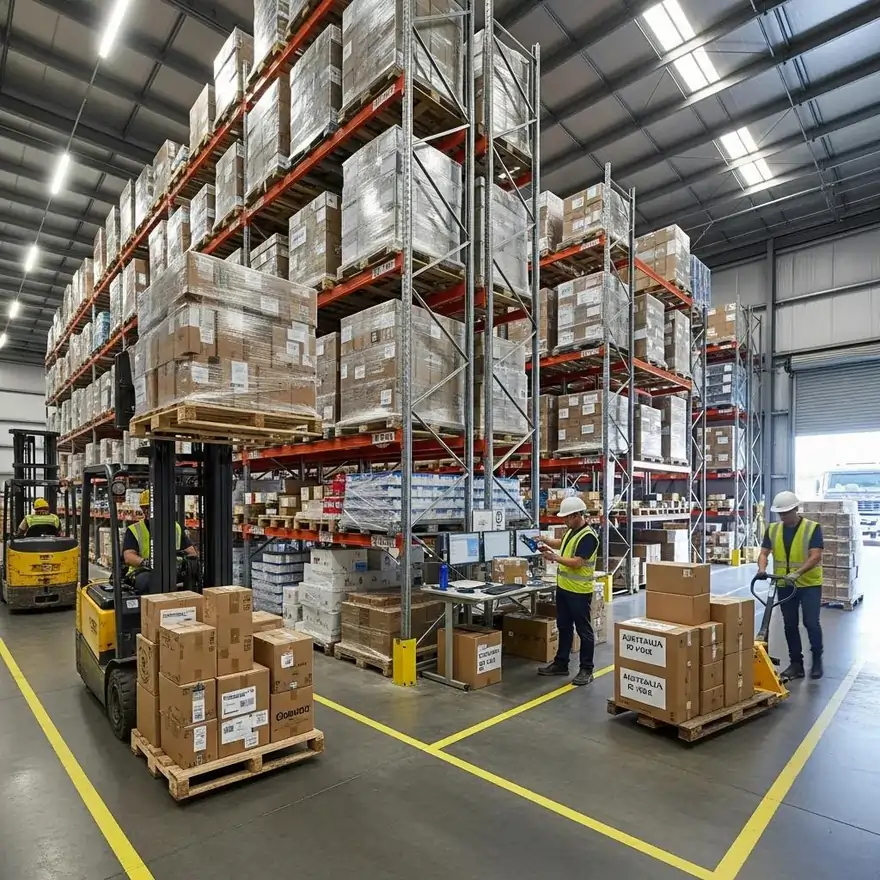
In Australia, third‑party logistics (3PL) refers to specialist providers that run warehousing, order fulfilment, transport, and freight services for shippers. 3PLs combine storage, inventory control, pick‑and‑pack fulfilment and carrier management so businesses can reduce day‑to‑day operational load and improve delivery reliability. Outsourcing to a 3PL lets you scale space and labour during peaks, access lower freight rates through aggregated volumes, and use systems like warehouse management software for clearer inventory visibility. Below we trace the move from basic carrier roles to full 3PL offerings and explain the practical differences between each model.
Common 3PL services used across Australian supply chains include:
- Warehousing and storage: Managed inventory solutions for seasonal or ongoing stock.
- Order fulfilment and pick & pack: Picking, packing, labelling and dispatch for ecommerce and retail.
- Freight forwarding and carrier management: Domestic and international shipping arrangements and paperwork.
- Project logistics and container unpacking: End‑to‑end coordination for oversize, staged, or complex deliveries.
These services explain why many businesses move from ad hoc transport to strategic partnerships with 3PLs. Next we compare the logistics models from 1PL through 3PL to show how responsibilities and value shift.
How has logistics evolved from 1PL to 3PL?
Logistics has moved from single‑party setups, where a company owns and runs its own transport (1PL), to outsourced, integrated models (3PL) that manage multiple supply chain functions. A 1PL keeps full control of assets and routes but carries all labour, capital, and admin costs, which limits quick scaling. A 2PL typically offers transport only and works as a carrier without warehousing or fulfilment responsibilities. A 3PL bundles warehousing, fulfilment, inventory control, and freight forwarding into a managed service, lowering capital expenditure and adding flexibility.
Ecommerce growth and more complex supply chains have driven this change in Australia: businesses now need faster fulfilment, multi‑channel shipping, and regional coverage. Knowing how each model allocates control, cost, and responsibility helps decide when outsourcing makes sense. With that background, the next section lists the practical components that make up modern 3PL services.
What are the core components of 3PL services?
Modern 3PLs offer modular services that combine to support end‑to‑end logistics: warehousing, order fulfilment (pick & pack), transport and freight forwarding, inventory management, and returns handling. Warehouses secure and handle stock; pick & pack turns inventory into customer orders; transport gets goods to customers; and freight forwarders manage carrier selection, consolidation, and cross‑border paperwork. These services are supported by systems like WMS and measured with KPIs such as order accuracy, on‑time dispatch, and inventory turnover.
To show how each component delivers client value, the table below contrasts their main functions and typical benefits.
Different 3PL components provide distinct operational functions and measurable value for clients.
| Component | Typical Function | Value to Client |
| Warehousing | Secure storage, stock handling and space management | Frees capital tied in infrastructure and shortens delivery windows |
| Pick & Pack Fulfilment | Order processing, packing and labelling | Increases order accuracy and improves customer experience |
| Transport & Distribution | Route planning, carrier coordination and delivery | Reduces shipping costs and improves lead times |
| Freight Forwarding | Documentation, consolidation and customs support | Makes domestic and international movement more efficient |
Combining these components creates scalable, measurable outcomes that support business growth. Next we cover the concrete benefits of partnering with a 3PL in Australia.
What are the benefits of partnering with 3PL providers in Australia?
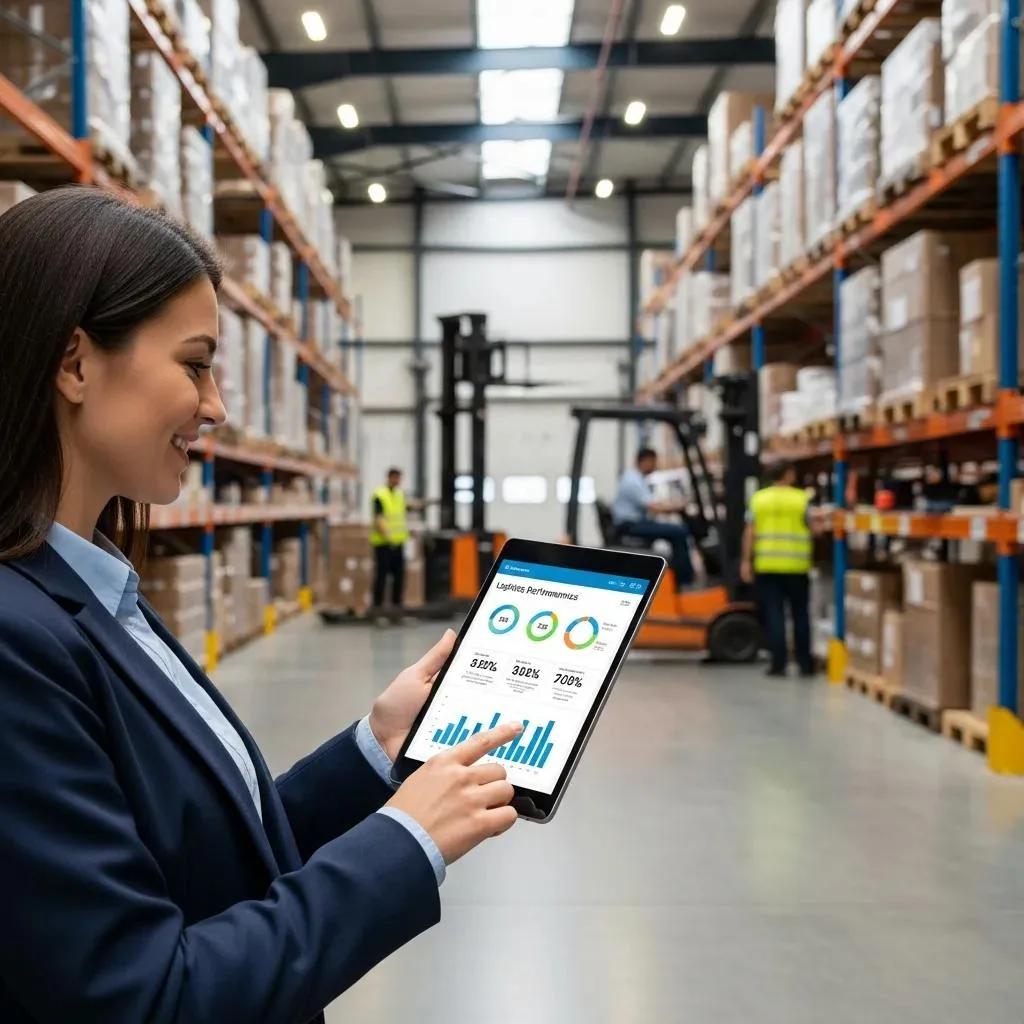
Working with a 3PL in Australia delivers clear benefits: lower operating costs, better delivery performance, scalable capacity in busy periods, and access to logistics technology. Outsourcing converts fixed costs, warehouses, equipment, and permanent staff into variable costs tied to activity. Specialist providers also secure better carrier rates through pooled volumes. Strategic 3PL partnerships give you WMS access and reporting that improve inventory visibility and forecasting, which reduces stockouts and excess stock.
Key benefits businesses commonly see with a 3PL are
Reduced costs: Lower capital requirements and improved freight rates boost margins.
Greater scalability: Flexible labour and storage scale up for seasonal demand without long‑term overhead.
Faster delivery: Regional warehousing and optimised distribution shorten transit times.
Better technology: WMS and reporting improve inventory control and planning.
Those benefits show up as lower cost per order, higher fill rates, and shorter lead times. The table below links each benefit to measurable outcomes and example metrics you can track.
Mapping benefits to metrics lets businesses evaluate provider performance objectively.
| Benefit | Measurable Outcome | Example Metric |
| Cost Reduction | Lower cost per unit shipped | % reduction in overall shipping spend |
| Scalability | Capacity to handle peak demand | Peak orders processed per day |
| Speed | Shorter transit and fulfilment times | Average days to delivery |
| Technology Access | Improved inventory accuracy and visibility | Inventory accuracy percentage |
Because these benefits are measurable, you can continually assess and improve the partnership. Next we explain how 3PLs cut costs for Australian businesses and raise efficiency.
How can 3PLs reduce operational costs for Australian businesses?
3PLs cut costs through economies of scale, stronger carrier negotiations, and shifting fixed overhead into activity‑based charges, especially useful for businesses with seasonal demand. By combining client volume, providers negotiate lower freight rates and better carrier terms, reducing per‑unit shipping costs. Outsourcing also eliminates the need to buy warehouses and material‑handling equipment and maintain permanent staff, freeing capital for growth.
Operational improvements, batch or zone picking, dynamic slotting and process standardisation, lower labour time per order, and reduced errors. The result is a lower cost per order and better margins on shipped products. The following section shows how 3PLs boost overall supply chain efficiency and scaling through specific techniques and technology.
In what ways does 3PL enhance supply chain efficiency and scalability?
3PLs improve efficiency with smarter process design, cross-docking, dynamic slotting, and streamlined reverse logistics that reduce touchpoints and speed order flow. Integrating WMS gives real‑time inventory visibility and automated replenishment alerts, improving turnover and cutting stockouts. Scalability comes from flexible labour pools, short‑term storage options and a networked warehouse footprint so you can respond to demand spikes without heavy capital investment.
For ecommerce, better pick accuracy and faster fulfilment drive customer satisfaction and repeat business. Project logistics and freight management add value for specialised shipments by coordinating equipment, route surveys, and milestone tracking to keep projects on schedule. With those operational gains in mind, the next section describes how a regional provider like Pat Express structures tailored 3PL solutions across Australia.
How does Pat Express deliver tailored 3PL solutions across Australia?
PAT Express positions itself as a hands‑on logistics partner offering tailored 3PL solutions across Australia. We combine regional warehousing with freight forwarding and project logistics expertise to build workflows that suit each client’s needs. With facilities in Sydney and Queensland, Pat Express manages everything from ecommerce fulfilment to container unpacking and commercial furniture installation, giving end‑to‑end support for multi‑stage deliveries.
We focus on flexibility and regional coverage to cut transit times and provide scalable labour at peaks. Our service mix is aimed at businesses that prefer a single provider for warehousing, distribution and specialised project logistics. The section below lists the specific services Pat Express offers and the benefits clients receive.
What comprehensive 3PL services does Pat Express offer?
PAT Express provides a practical suite of logistics services for Australian supply chains: core 3PL (warehousing, pick & pack, and distribution), freight forwarding, project logistics, container unpacking, and commercial furniture installation. Our freight forwarding service handles carrier selection and shipping documentation for domestic and international moves, while project logistics covers planning and on-site coordination for oversized or staged deliveries. Onsite services like container unpacking and furniture installation reduce handoffs and simplify the final mile for project clients.
Our services are designed to work together so clients can reduce complexity and centralise logistics management. Next, we explain why businesses choose Pat Express for regional capability and project experience.
Why choose Pat Express as your strategic logistics partner?
Businesses choose PAT Express for our regional warehouse presence in Sydney and Queensland and our hands‑on experience with freight forwarding and project logistics. We tailor solutions and manage projects end‑to‑end, so you can combine services like container unpacking, local distribution and onsite installation without juggling multiple contractors. That regional footprint and unified service set reduce transit time, cut administrative overhead, and improve coordination for multi‑stage jobs.
By integrating warehousing, distribution and specialised project services, Pat Express helps clients consolidate providers and simplify KPI tracking and reporting. The next major section covers ecommerce logistics options in Australia and how 3PLs support online retailers.
What ecommerce logistics solutions are available in Australia?
Ecommerce logistics in Australia centers on fast, accurate fulfilment, easy returns, and platform integrations to support omnichannel retail. Typical services include secure warehousing, pick & pack, custom kitting and packaging, plus integrations with ecommerce platforms and marketplaces for automated order flows. Strong ecommerce 3PLs provide inventory visibility, real‑time reporting, and flexible fulfilment options, such as same‑day or next‑day dispatch, to lift customer experience and conversion rates.
Common ecommerce‑focused services offered by 3PLs and what they solve for online retailers include:
- Secure storage and climate‑controlled handling to protect product quality.
- Pick & pack with barcode scanning to maintain order accuracy.
- Returns management and refurbishment to streamline reverse logistics.
These services reduce errors and speed delivery, which improves customer satisfaction and lowers operational complexity. The next subsection describes how Pat Express supports ecommerce fulfilment and inventory control.
How does PAT Express support ecommerce fulfilment and inventory management?
PAT Express combines secure warehousing, efficient pick & pack, and transparent inventory reporting so online retailers get reliable dispatch and better visibility. Our Sydney and Queensland facilities allow regional distribution that shortens delivery windows across eastern Australia. Inventory control includes regular cycle counts and WMS reporting to help forecasting and avoid stockouts. We also integrate order streams with fulfilment workflows so orders and shipping labels are processed automatically, reducing manual touchpoints.
With regional storage and centralised fulfilment data, PAT Express helps ecommerce merchants cut shipping times and make smarter inventory decisions. The next subsection summarises the advantages of using a 3PL for Australian online retailers.
What are the advantages of using a 3PL for Australian online retailers?
Partnering with a 3PL gives online retailers faster delivery, lower shipping costs, and simpler returns handling, letting them focus on marketing and product development instead of logistics. Regional fulfilment boosts customer satisfaction and conversions, while consolidated shipping volumes with a 3PL reduce per-order freight costs. Outsourcing also frees capital from warehouses and labour so retailers can scale during busy seasons without permanent overhead.
- Faster delivery increases retention and reduces cart abandonment.
- Lower freight costs protect margins on shipping‑heavy products.
- Outsourced returns handling cuts admin burden and speeds processing.
These benefits make 3PL partnerships a practical growth tool for ecommerce businesses operating in Australia’s evolving retail landscape.
Australian e‑business retail supply chain strategies
A concise review of how Australian organisations approached e‑commerce, particularly in B2B retail, highlighting strategies for efficient supply chain relationships and collaborative inventory practices.
How intimate are Australian e‑business retail supply chains?, 2003
The next H2 looks at where warehousing and distribution hubs sit in Australia and why location matters for performance.
Where are key warehousing and distribution services located in Australia?
Australia’s warehousing and distribution networks cluster around major population centers and transport corridors to minimise transit time and cost. East coast hubs like Sydney, plus facilities in Queensland, provide strong regional coverage. Proximity to ports, highways, and urban centers drives lead times and cost efficiency, and providers with multiple warehouses can place stock closer to customers to speed delivery. When evaluating providers, pay close attention to facility features such as secure storage, handling capability, and access to distribution lanes.
The table below compares typical attributes of Sydney and Queensland warehouses to illustrate regional strengths and the client types each serves.
Comparing regional warehouse features helps align distribution strategy with market needs.
| Warehouse Location | Key Attribute | Typical Service Area |
| Sydney | Close to dense population and major transport links | Metropolitan and national distribution |
| Queensland | Coverage for northern and central regions | Statewide and northern corridor distribution |
| Regional Hub | Flexible storage, cross-docking, and overflow capacity | Seasonal and project‑based clients |
Using multiple warehouse locations shortens transit time and places inventory nearer to end customers. The two subsections below outline features of Pat Express’s Sydney and Queensland facilities.
What are the features of Pat Express’s Sydney 3PL warehouse services?
PAT Express Sydney warehouse focuses on secure storage, quick distribution access and ecommerce fulfilment that supports metropolitan delivery windows. The Sydney facility is a key dispatch point for urban customers and handles pick & pack, cross-docking, and carrier handoffs. Its proximity to transport links helps reduce last‑mile transit and makes it easier to meet tight service level agreements for retail and B2B customers.
These capabilities help businesses shorten delivery lead times and centralise inventory for Australia’s largest consumer markets. The next subsection explains how Queensland warehouses support regional logistics.
How do Queensland warehouses support efficient logistics operations?
Queensland warehouses provide regional storage, handling and distribution that reduce transit times to northern and central Australia. Local facilities let companies position inventory closer to customers outside the main East Coast metros, lowering shipping costs and speeding delivery for that region. Queensland sites also offer contingency and overflow capacity during peak seasons or larger project rollouts.
Regional warehouses form part of a distributed fulfilment strategy and add resilience when demand shifts between states. With location context covered, the final major section outlines specialised freight forwarding and project logistics services for complex shipments.
What specialised freight forwarding and project logistics services does Pat Express provide?
Pat Express delivers freight forwarding and project logistics services to coordinate domestic and international shipments and to manage complex cargo that needs specialised planning. Freight forwarding covers carrier selection, consolidation, and documentation to keep goods moving across modes and borders. Project logistics handles planning, stakeholder coordination, and specialist equipment for oversized or time‑sensitive consignments. Services like container unpacking and customs liaison reduce on-site handling complexity for importers and project managers.
This mix helps clients with routine distribution and one‑off project needs by pairing tactical forwarding with hands‑on execution. The next subsection explains how freight forwarding supports shipping operations.
How does freight forwarding facilitate domestic and international shipping?
Freight forwarding makes shipping smoother by selecting suitable carriers, consolidating shipments where it helps, and managing paperwork and compliance so goods stay on schedule. Forwarders match cargo to the best mode, negotiate rates, handle customs documentation, and track shipments, acting as a single point of contact to resolve exceptions and minimise delays.
These services reduce admin burden and transit risk, letting shippers concentrate on their core business. The following subsection describes project logistics practices that ensure on‑time delivery for complex cargo.
What project logistics expertise ensures on‑time delivery for complex cargo?
Project logistics relies on detailed planning, risk assessment, and coordinated execution to deliver complex cargo on time. This includes route and site surveys, securing specialised lifting and transport assets, sequencing interdependent tasks, and milestone tracking. Regular reviews and contingency plans address risks from weather, permits, or equipment availability.
The intricate nature of project logistics, especially for oversized or high‑value loads, demands a comprehensive, integrated planning approach to meet scope, budget, and timing objectives.
Project cargo logistics: operations, planning and management
A practical overview of project cargo logistics covering planning, transport routing, end‑to‑end visibility, and technical safety considerations for oversized or high‑value infrastructure shipments.
The study of project cargo logistics operation: a general overview, O Turbaningsih, 2022
This structured approach to scheduling and risk management helps ensure complex shipments meet their targets, completing our exploration of 3PL capabilities and guidance for choosing the right provider.
Conclusion
Partnering with a third‑party logistics provider in Australia delivers measurable benefits: lower costs, better delivery performance, and the flexibility to scale. By tapping specialist expertise and technology, companies can streamline operations and focus on growth. Understanding how tailored 3PL solutions work will help you choose the right partner and measure success. If you are ready to improve logistics outcomes, our 3PL services are built to support your goals.